


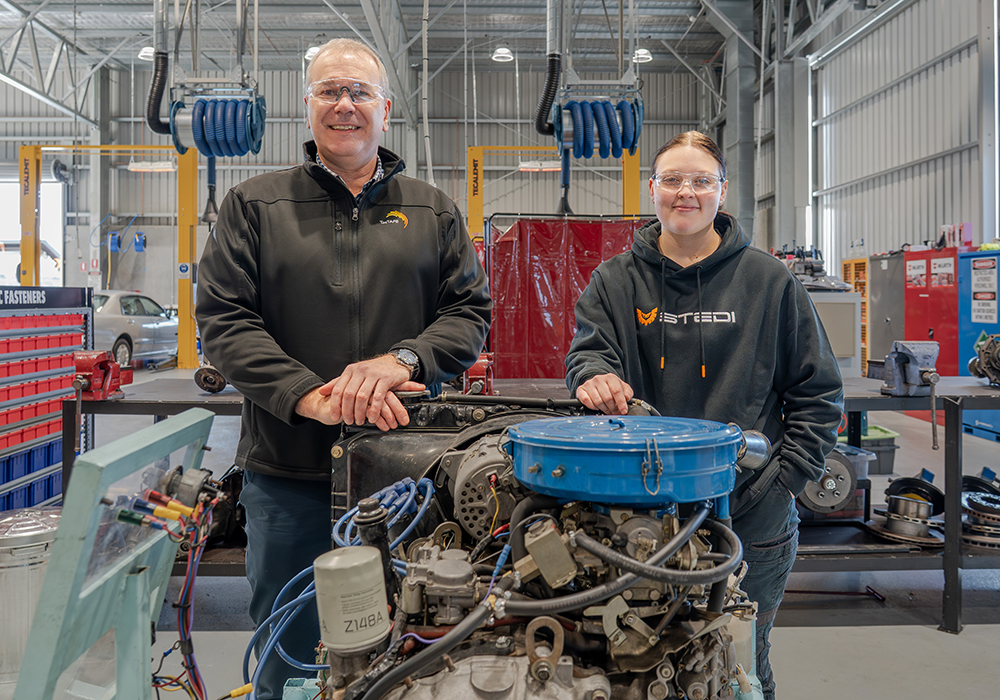
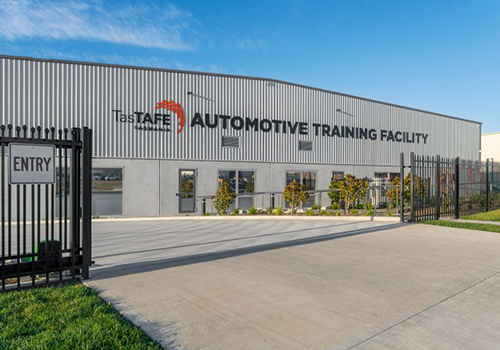
TasTAFE has officially opened its new Automotive Training Facility at Cambridge Industrial Park, marking a significant investment in Tasmania’s automotive workforce and future skills needs.
The purpose-built facility – secured through a partnership between TasTAFE and the Tasmanian Automotive Chamber of Commerce (TACC), with funding support from the Tasmanian Government – will deliver modern, industry-aligned training for automotive apprentices and technicians.
The new facility includes:
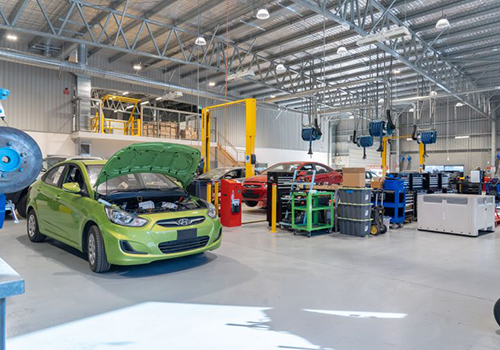
- An automotive workshop replicating industry workspaces, with six hoists, tyre fitting and balancing areas, and a layout mirroring professional service centres.
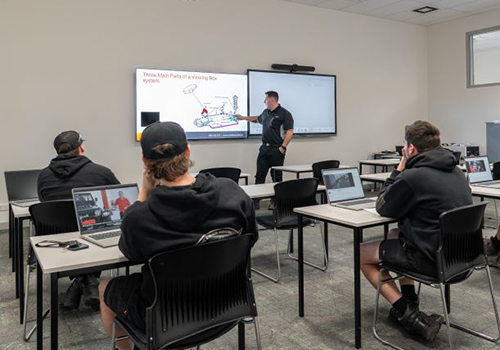
- Three flexible teaching spaces equipped with AV and VR technology.
- Modern amenities for learners and staff, including breakout areas and dedicated office space.
- Shared spaces for industry-led events, training and forums.
- Safe and efficient site access, with clear pedestrian and vehicle separation and ample parking.
TasTAFE is now delivering the Certificate III in Light Vehicle Mechanical Technology at the Cambridge site, with additional short-course training in Vehicle Inspection (non-accredited) and Automotive Air Conditioning (accredited) to follow this year.
From 2027, the facility will expand to include Certificate III in Automotive Electrical Technology and EV/Hybrid skill set training, supporting Tasmania’s transition to an increasingly electrified vehicle fleet.
TasTAFE CEO Dr Norman Baker said Tasmania’s automotive sector remains a critical part of the state’s economy, contributing nearly $300 million annually and employing more than 7,500 people across the state.
With Tasmania having the oldest vehicle fleet in the country, maintaining safe and reliable vehicles depends on a skilled workforce.
“Tasmania’s automotive workforce is essential to our economy and way of life,” he said.
“Our need for skilled technicians has never been greater – supporting our freight networks, regional communities and everyday mobility.”
“Together with industry, we are preparing the next generation of technicians to service internal combustion engines, diagnose complex electrical systems, and maintain the high-voltage EVs and PHEVs entering our market.”
“Apprentices are central to the future of the industry – and through facilities like this, combined with strong industry partnerships, we are helping to build that future.”