


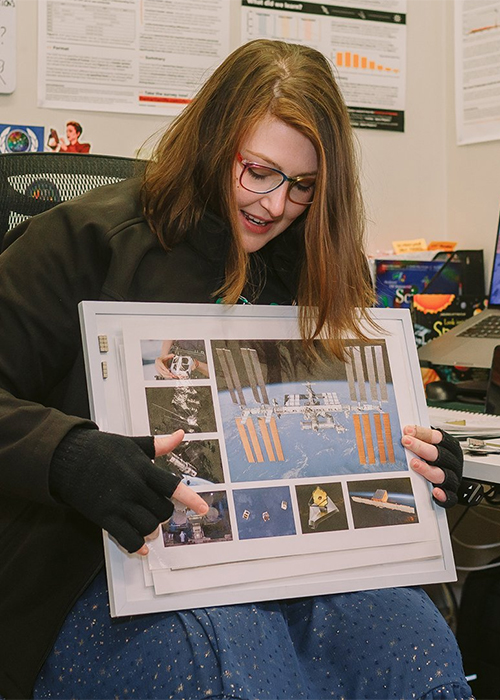
“As technologists, we also sometimes have to fight against the idea of Tasmania as bespoke, handcrafted, and old-timey, of not being cutting edge. Most people don’t know that there are people down here making world-leading software.”
Mars first became a regular visitor to Tasmania’s west coast with employment and outreach programs run by the University of Tasmania or as part of National Science Week. The more time she spent there, the more she loved it.
Surrounded by cool-temperate rainforest and stormy seas, Strahan is one of the best places in Tasmania to view the night sky. Mars Buttfield-Addison dreams of waking there every morning, walking to the Coffee Shack, and on to the community science centre she hopes to create with her husband, Paris. “I would talk to kids all day about their weird and wacky questions… Then I would go home, sip tea in a hammock, and look at the forest. And then I’d go to bed, wake up, and do it all again.”
Her connection with Tasmania’s west coast grew through University of Tasmania outreach programs and National Science Week. As a science communicator, her goal is to spark curiosity for its own sake. “We don’t know what the future world will look like… The best thing we can wish for people is that they can choose to do something because it interests them.”
“Scientific computing systems need to be really accurate and high-performance but also tailored very specifically to the needs of each domain. I don’t know anyone in tech who works on problems as diverse as I do, but I’m loving it.”
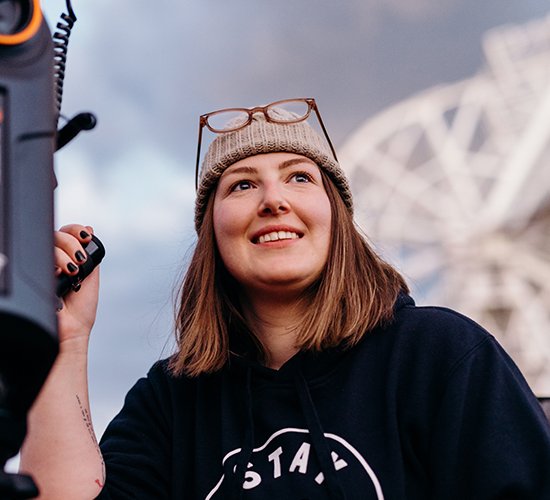
Mars grew up in Logan, south-east Queensland. “We didn’t know until I was in primary school, but I am autistic, so I didn’t have a typical childhood experience,” she says. Reading was a powerful ritual, and she quickly outpaced adults around her. Her family supported her wide-ranging interests — “I was an everything kid,” she laughs — and teachers and librarians helped her explore them.
High school proved challenging, and Mars left early, working various jobs before deciding on a drastic change after her great‑grandmother died. “One day, I quit my job, packed my car Rhonda the Honda up to the roof, and drove away to Tasmania…” The calm she felt convinced her she had found home.
Encouraged by her mother, she visited a university open day despite not finishing high school. Inspired by the alternative pathways coordinator, she enrolled. After excelling for six months, she was told to choose a degree. Unsure where to start, she eventually chose technology and threw herself into the local community. GovHack introduced her to real-world programmers — “And also where I met my husband.”
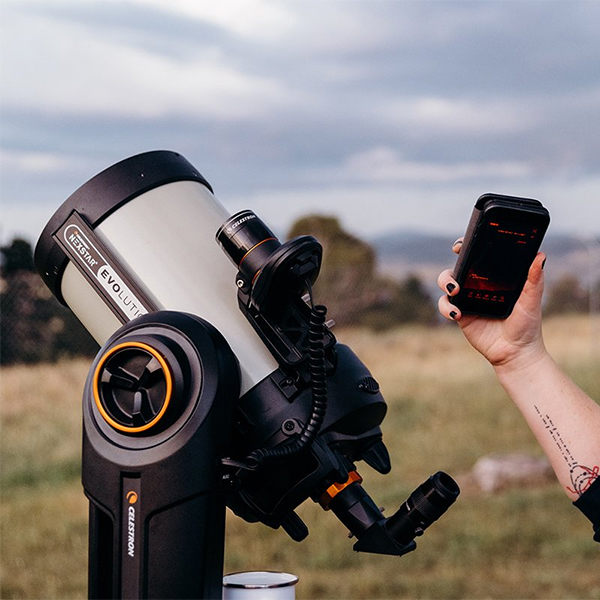
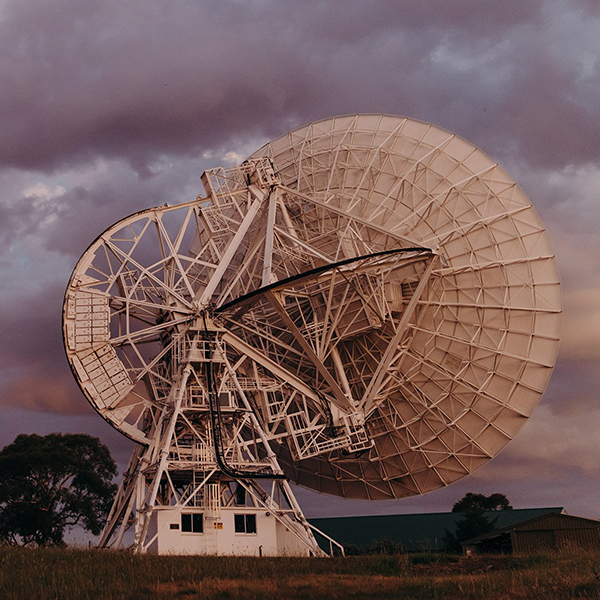
Tasmania’s tech scene gave her opportunities and confidence. A lucky conversation at a conference led to her writing a book for O’Reilly while still an undergraduate. She fell in love with practical machine learning and saw herself as a support scientist: “As a blacksmith is to a knight, so I am to scientists.”
Her passion for teaching grew alongside her expertise. “When I started being asked to give talks and write books, I rapidly realised I liked teaching people more than just learning myself.”
Now working on a PhD with UTAS and CSIRO on tracking space junk, she blends her interests in astronomy and environmental conservation. She has become a prolific communicator through festivals, schools, and international teaching.
Though Mars often describes her path as luck, she recognises the importance of community. “The idea that it takes a village is true in every aspect.” Above all, she aims to help people realise they can understand things they once thought impossible. “I want to be part of that for kids, adults, everyone.”
To read the full story visit tasmanian.com.au/stories/mars-buttfield-addison/
Story courtesy of Brand Tasmania

Find out more
Explore pathways into technology and software development through the Bachelor of Information and Communication Technology at the University of Tasmania, along with VET options like the Certificate IV in Information Technology at TasTAFE. Build practical skills in programming, cybersecurity, data analytics, and systems development, supported by hands‑on projects and industry‑connected learning experiences.
Even while you’re still in school, you can begin building your future through Work-based Learning (WBL), School-based Apprenticeships (ASbA), and VET qualifications. These programs give you hands-on experience and real-world skills to prepare for a successful career as a professional athlete or in sport science and performance support roles.
Take a quiz, find your future
Curious about the kinds of problem‑solving involved in different jobs? Our Industry Quizzes webpage offers a range of short activities that aren’t formal tests of reading or maths, but they can give you a clearer sense of the skills you already use and the ones you might want to build.