



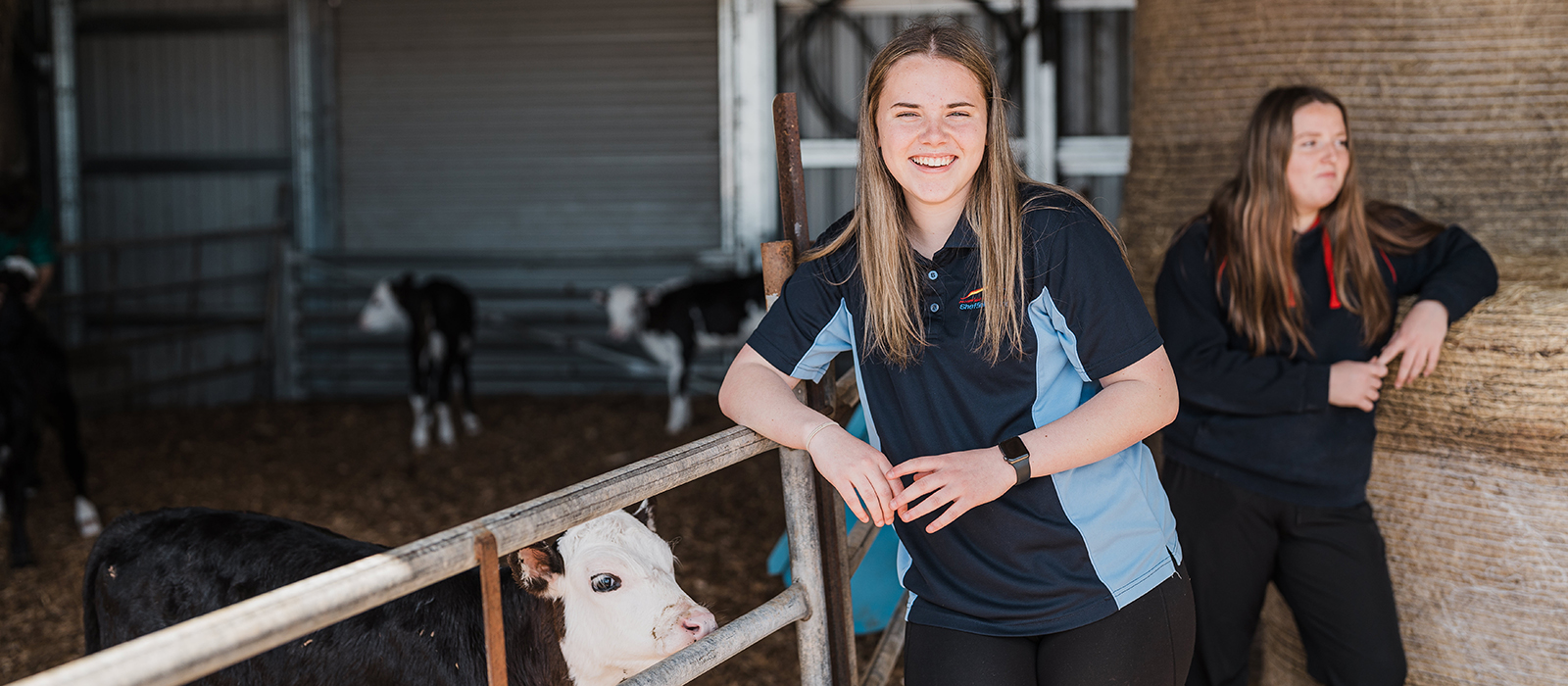
An Australian School-based Apprenticeship (ASbA) is a practical way to start building your career while you’re still at school. If you’re in Year 10, 11 or 12, an ASbA lets you combine your school studies with paid work and structured training in an industry that interests you.
ASbAs are available in over 500 occupations, covering a wide range of industries – so there’s a strong chance you’ll find an option that aligns with your interests, strengths, or future career goals.
One of the biggest advantages of an ASbA is that you don’t have to choose between school and work. You continue attending school while working towards a nationally recognised qualification and earning a wage along the way. It’s a flexible, practical option that brings together learning, experience and employment benefits – setting you up for what comes next.
How does it work? The nuts and bolts of an ASbA
An ASbA is designed to fit around school while giving you real workplace experience. It combines paid employment with formal training, all linked together in a structured way to support your learning and career development.
You’ll sign a training contract, which is what officially makes it an apprenticeship or traineeship. This contract connects your training with your employment, so what you learn directly relates to the work you’re doing on the job.
A Registered Training Organisation (RTO) delivers the formal training component. They’ll give you units to complete and regularly visit you at work to check in on your progress or carry out assessments. Once you’ve successfully finished all requirements, the RTO will issue your nationally recognised qualification.
You’ll work a minimum of 7.5 hours per week during school terms, with the opportunity to work additional hours during school holidays. This structure helps you balance your school studies with paid work and training.
Sometimes employers advertise ASbA opportunities that you can apply for directly. But you can also take the initiative by approaching employers yourself and asking if they’d consider taking you on as a school-based apprentice or trainee.

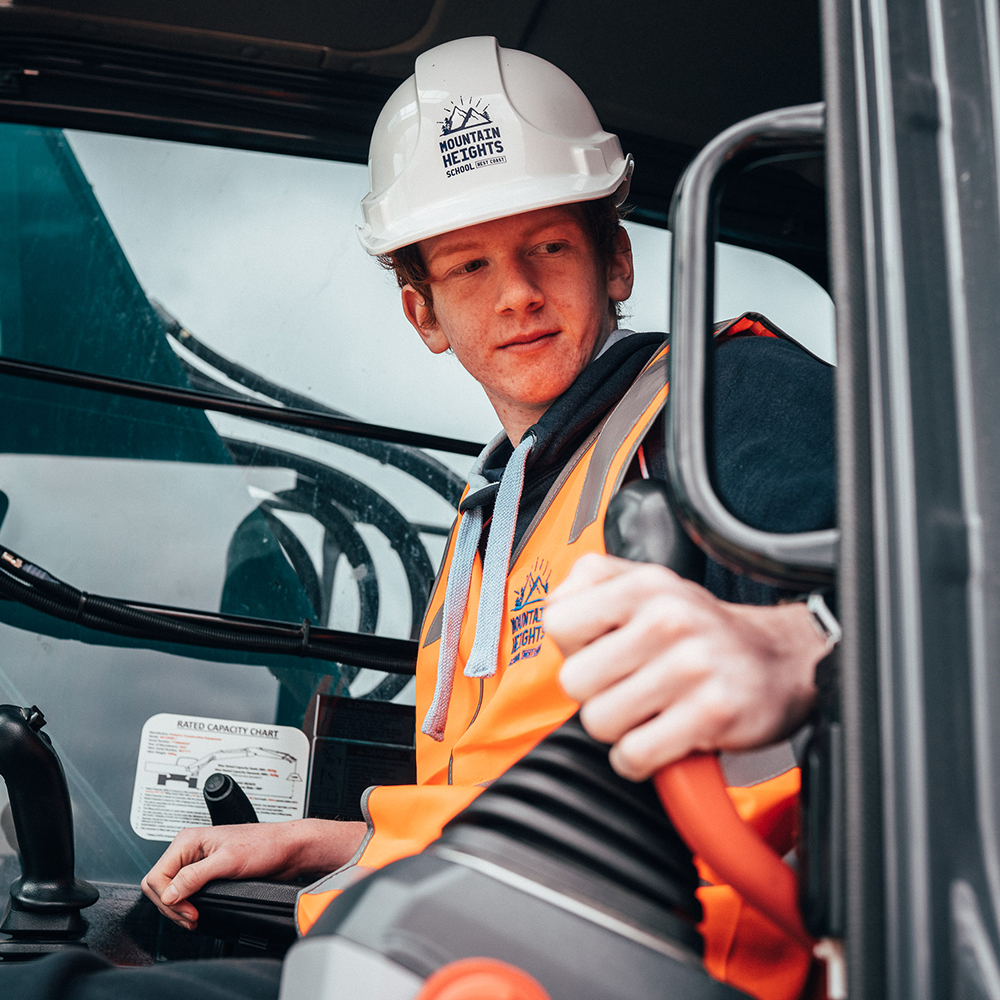
What will you get out of a school-based apprenticeship?
You’ll get heaps. At the end of Year 12, you can walk out of school with your Tasmanian Certificate of Education (TCE), a completed qualification or be well on your way to completing your qualification.
Some useful tips for getting your own ASbA
- Start exploring your own career interests
- Talk with your teachers. Or your career advisor or VET coordinator at your school or college about ASbA. They can often make things happen or at least steer you in the right direction
- Make a list of potential employers and try and call them
- Undertake a work placement or work experience to get your foot in the door
- Ask your school or college for some ASbA flyers to hand out to potential employers
- Talk to local businesses about employing you on a ASbA (let them know you’re keen)
- Speak to your current employer, if you have one, about the possibility of doing an ASbA
- Tap into your network of family and friends for employment possibilities.
- Check out employment websites and career noticeboards at school/college
- Chat with students who are already doing an ASbA, and pick their brain.
Ask your school about school-based apprenticeship opportunities
Talk with your ‘ASbA’ coordinator at your school or college today. It could be one of the best chats you’ll ever have, and can set you on an extraordinary career path. For more information about Apprenticeships and Traineeships for students, click here.
Student success story
From School to Workshop: How Early Industry Exposure Builds Careers
Karlie is proof that work exposure opportunities at school can help kickstart an awesome career.
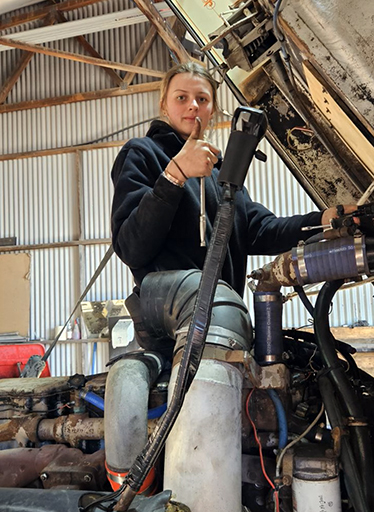
Karlie Morgan grew up in a family that loved tinkering about with engines. Often this meant pulling motors apart, replacing spark plugs, brake pads, carburettors, and working with different tools. It wasn’t until Karlie was a teenager that she considered a career path involving fixing engines herself. “I grew up with lots of bikes and cars as a kid. Plus my dad was a truck driver, so engines have always been a thing,” said Karlie.
In 2022, 15-year old Karlie started an Australian School-based Apprenticeship (ASbA) while completing Year 10 at Kings Meadow High School. Kylie began working two days a week at Moore Diesel and she’s been working there ever since.
“What’s great about doing an Australian School-based Apprenticeship is that I’m getting the opportunity to start the career I want.”
Working at Moore Diesel-, Karlie gets to slip on a pair of overalls and work on some big machinery. “It’s similar to being a mechanic, except I get to work on things like tractors and trucks, which is pretty awesome.”
After completing Year 10, Karlie went straight into a fulltime apprenticeship in 2023. Karlie is studying a Cert III in Heavy Commercial Vehicle. The apprenticeship sees Karlie now working 5 days a week at Moore Diesel. At the same time, she has to complete assignments (and on-campus activities at TasTAFE) to gain her qualification.
“Once I finish the apprenticeship, and I have the Certificate, then it gives me heaps of opportunities to branch out into different things. There’s not many people who choose to specialise in Heavy Commercial Vehicle repairs,” she said.
For some students like Karlie, going on to complete Years 11 and 12 in a school might not be the perfect fit (and that’s OK). Every one is different. Completing an Approved Learning Program (ALP) is what it’s all about. This could mean enrolling at a school or college, commencing a full-time apprenticeship/traineeship or commencing vocational education and training with a Registered Training Organisation (RTO).
Of course, with any Apprenticeship, there’s still a study component. The difference is you’re studying subjects in an adult-learning environment. “The TasTAFE study is quite involved. There’s a lot of bookwork, and you’ve got to research everything. Then you’ll do a practical assessment.”
For six weeks of the year, Karlie attends the TasTAFE campus in Alanvale. Here she works alongside other apprentices who are finishing the same Certificate. “It’s a great learning environment. The teachers are very helpful, and they know what they’re doing.”
Karlie is on track to finish her training in 2026, and to gain her qualification. If things go to plan, Karlie will be fully qualified in a specialist trade at only 19 years of age.
When asked if she’s sure it’s the right career path for her, Karlie didn’t hesitate. “Yes, I am,” she said.